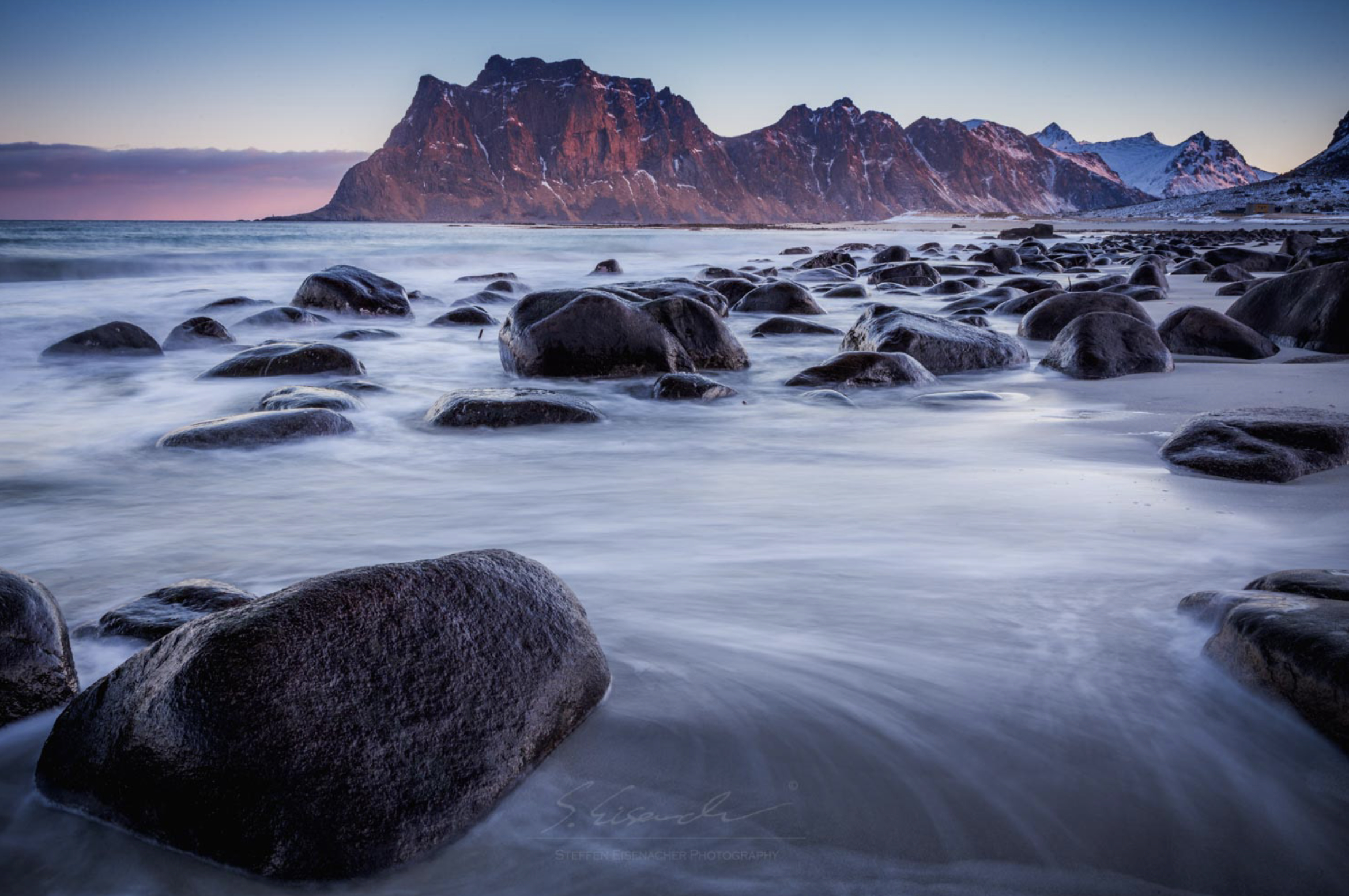

In the Lofoten archipelago, the atmosphere is defined by the low angle of the light and the raw scale of the coastal terrain. High granite peaks rise directly from the Atlantic, forming narrow fjords where the water shifts from deep ink-blue in the shadows to pale turquoise over the shallow, sandy shelves.
For much of the colder months, the sun remains low, skimming the tops of the mountains without ever climbing high into the sky. This produces a continuous, horizontal light that casts long shadows across the water and highlights the fine texture of the rock faces. The air is cold and clear, making distant islands and snow-covered ridges appear sharply defined against the grey-blue horizon.
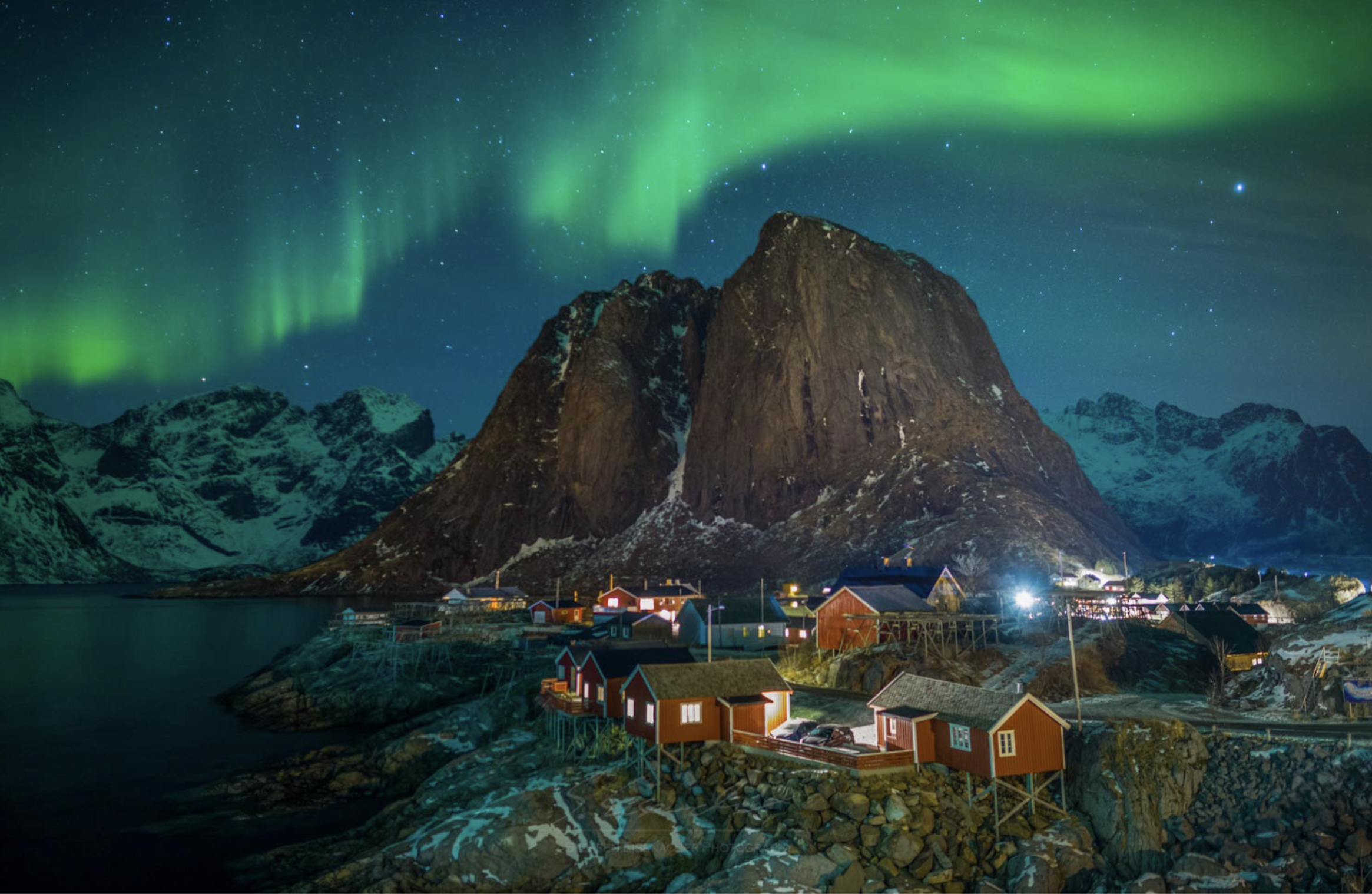
Along the water’s edge, the architecture is built directly into the coastline. The traditional wooden fishing cabins, known as rorbuer, sit on timber pilings driven into the rock. Painted in matte red ochre or dark yellow, their pine cladding is visibly weathered by salt spray, frost, and wind. The details are quiet and functional: salt crystals caught in the grain of unpainted wood, iron hardware softened by rust, and wooden piers worn smooth by ropes and sea ice.
The transition between the interior and exterior of these cabins is immediate. Outside, cold air moves constantly across the open fjord. Inside, behind thick timber walls, the environment becomes still and warm, held together by the texture of pine paneling, low lighting, and the dry heat of a stove.
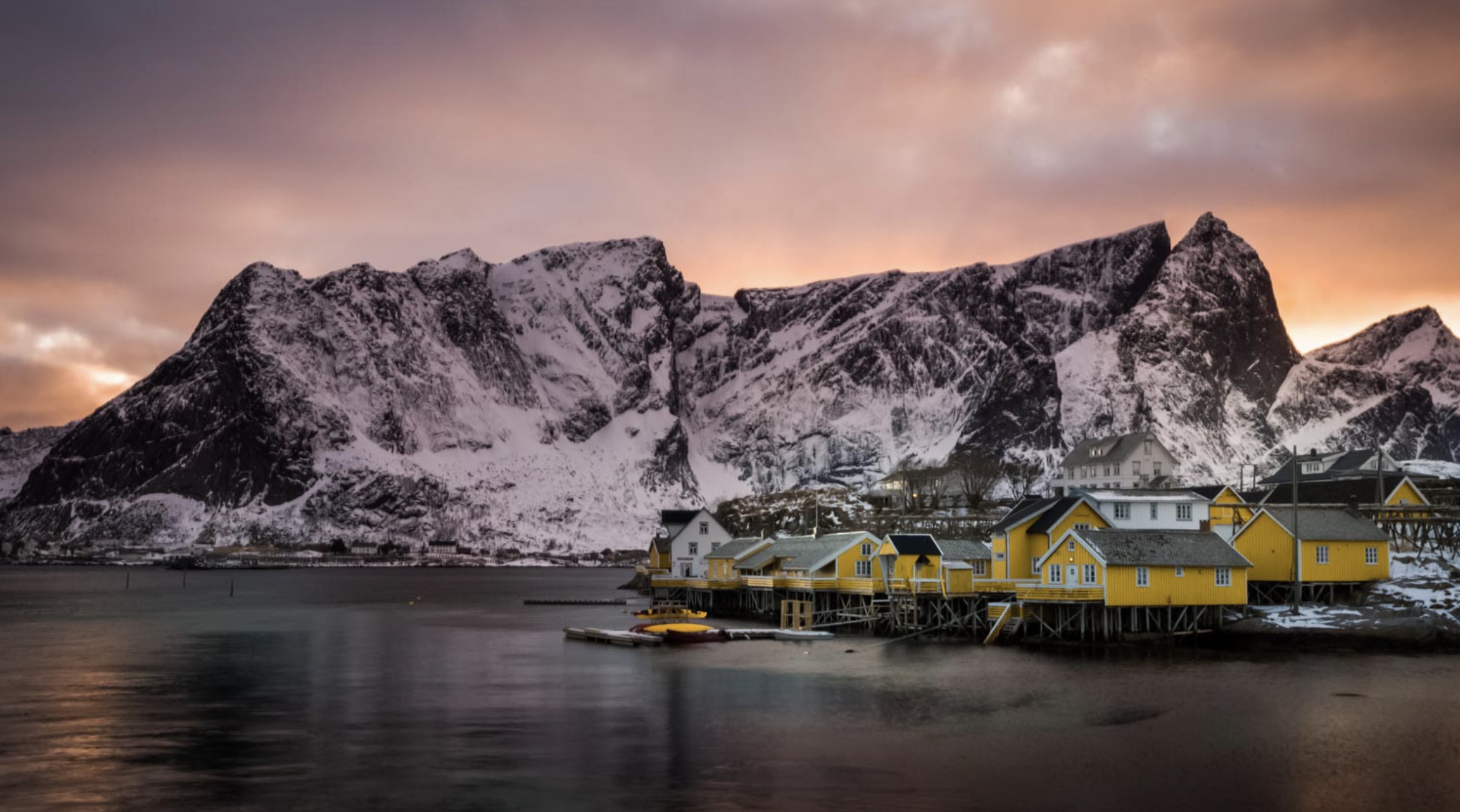
For a hospitality property, this contrast offers plenty to work with visually. The landscape can feel vast and exposed, while a cabin window, a wooden dock, or a small pool of warm light creates a much more intimate frame. A wet reflection on the boards outside can carry as much atmosphere as a wide view of the mountains. So can the red wall of a rorbu against snow and granite, or the soft light falling across a simple interior.
These are the details we find ourselves returning to when working in places like Lofoten. Not only the scale of the landscape, but the marks it leaves behind: weathered timber, salt on the wood, frost on the rocks, and the warm glow of a room looking out toward the water. For hotels and tourism boards, they offer a way of placing a property within its surroundings without needing to explain the landscape itself.
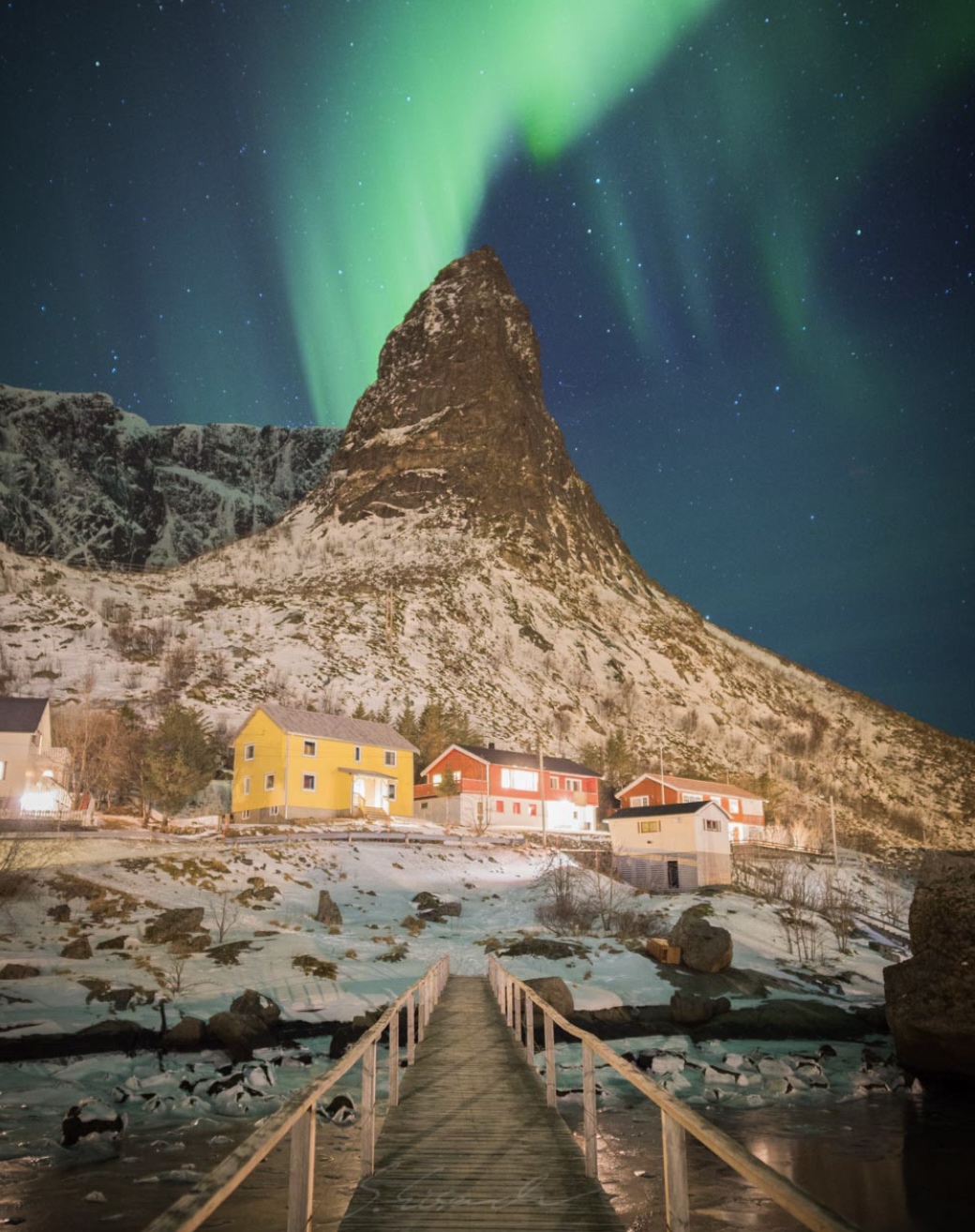
In Lofoten, the distance between exposure and shelter is often only a few steps. Outside, the mountains and sea occupy most of the view. Inside, the same landscape appears through a window, reflected on wet timber, or reduced to a patch of light across the floor.
See more stories
The Benefits of a Nimble Production Team