New York City is often understood through its scale, but experienced through its physical transitions. Moving through the street grid, the light, materials, and sound can shift noticeably from one block to the next.
Along the primary avenues, the environment is defined by verticality. Long corridors of stone, glass, and steel create deep urban canyons where light behaves in very particular ways. At certain hours, the low sun slices between the buildings in sharp, geometric bands, catching steam as it rises from street grates against the deep shade of the pavement. The sound is continuous, a low hum of traffic, footsteps, and movement carried between the facades.

Turning off an avenue onto a side street changes the atmosphere almost immediately. The scale drops, the buildings become lower, and the materials shift toward weathered brick, cast iron, and brownstone. The sound softens with less traffic and more space between the buildings. In neighborhoods such as SoHo and the West Village, the street level becomes tactile: the cool surface of painted iron, the uneven texture of Belgian block paving, and the deep shadows cast by stone stoops.
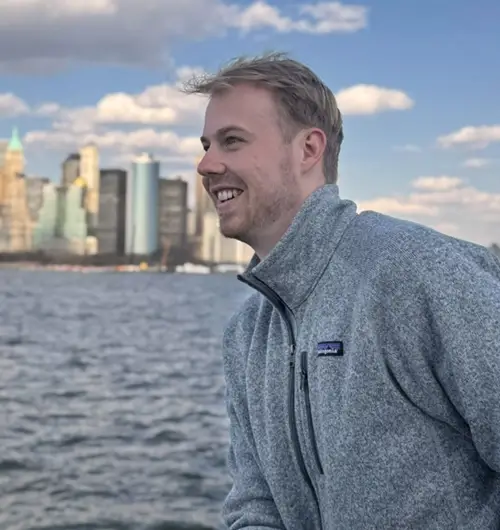
At the city’s edges, the environment opens up again. Along the Hudson and East Rivers, the grid meets open air and water. The density of the surrounding architecture gives way to longer views and a constant breeze off the harbor. Old timber piers and rusted steel structures sit alongside more recent stretches of parkland, with the movement of the water creating another layer of sound and motion.

For those documenting urban destinations for hotels and hospitality brands, these contrasts often provide more context than a conventional skyline view. A property can be understood through what surrounds it: the morning light entering through a high window, an unpainted brick facade across the street, the texture of a stoop below, or the transition from the movement and noise of the street into a quieter interior.

By late afternoon, the same streets can look entirely different from how they did a few hours earlier. Light moves across the facades, shadows stretch further into the pavement, and the reflections on the water begin to change. Somewhere between the avenues, side streets, and waterfront, the city keeps shifting, block by block.
See more stories

Cala at WTM 2026