

In the Yucatán Peninsula, the transition from the surface to the subterranean environment of the cenotes is marked by a sudden change in temperature and light. On the jungle floor, the heat is constant and the low scrub vegetation is dense. But moving down into a limestone sinkhole, the air immediately cools, and the ambient sounds of the jungle are replaced by a distinct quiet.
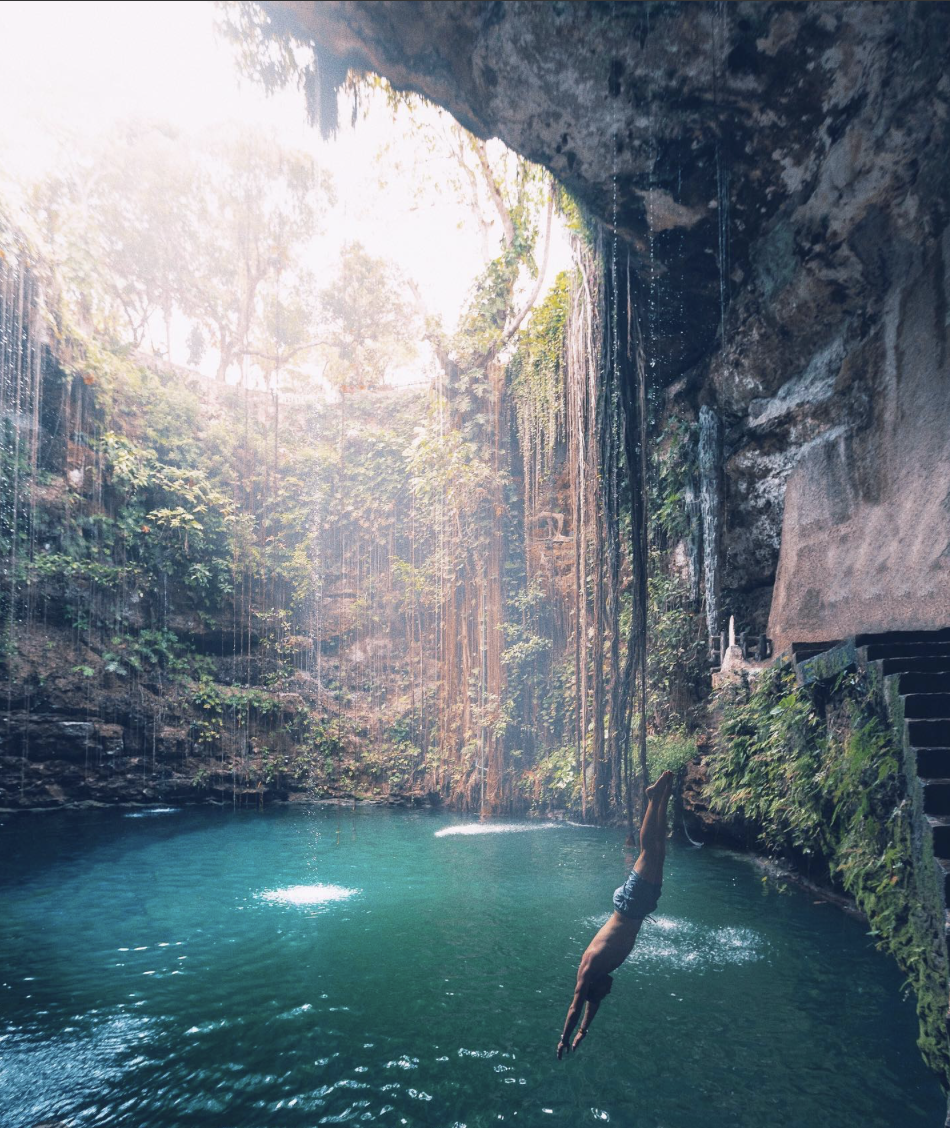
During our projects in the region, we have spent time documenting these spaces. What stands out first is the verticality of the environment. Many of these caverns are partially enclosed, with a single opening at the surface where the roots of Alamo trees hang down, stretching ten or fifteen meters to reach the water below. These roots are thick and fibrous, creating a natural screen against the limestone walls. The stone itself is pale grey, textured by centuries of water erosion, with shelves of limestone that extend just below the surface of the pool.
The movement of light inside these caverns is highly specific. Depending on the time of day, a single shaft of sunlight enters through the ceiling opening, cutting through the damp air to illuminate a small, circular patch of water. Where the light hits, the water appears a transparent, pale green; in the shadows, it deepens to a dark, solid blue. The water is almost entirely still, reflecting the texture of the ceiling and the hanging roots with absolute clarity.
When documenting these environments for hospitality properties or tourism brands, the focus shifts away from wide landscapes to these smaller, quiet relationships. It is about capturing the texture of the wet limestone, the slow drip of water from a stalactite, or the way the morning light softens the dark corners of the cave. These details offer a different kind of visual context, showing a side of the destination that exists away from the beach.
Spending time in these subterranean spaces becomes about observing how the natural elements - the stone, the water, the filtered light, and the hanging roots - interact in silence. For those working in destination marketing, understanding these transitions helps shape how a region is communicated, revealing a landscape that is as much about the quiet of the interior as it is about the coastline.
See more stories

The Benefits of a Nimble Production Team